
Previous Residents at a Spring Valley Address
A backward address trail uses different sources for different eras. The Clark County Assessor supplies the present parcel identity. The Recorder preserves the deed trail. Criss-cross books connect a known street address to a printed occupant for particular years, while census and newspaper material can add household context. None is a complete roll of everyone who lived at an address. Use the address, APN, legal description, source year, and the source’s own place label together, especially where a Spring Valley property uses Las Vegas as its postal city.
Spring Valley, the Spring Valley TAB area, a Spring Valley parcel, and a Spring Valley postal address can be recorded under different labels. A Spring Valley history note should preserve both the county jurisdiction and postal city. Keep the Spring Valley postal label separate from the Spring Valley unincorporated-town field, the Spring Valley TAB boundary, and the Spring Valley CDP context.
| Source | Years it covers | Where held | What it can show |
|---|---|---|---|
| Assessor parcel record | Current fiscal record | Clark County Assessor/OpenWeb | Current owner, mailing and situs addresses, APN, sale, structure |
| Assessor-linked document images | 1999-09-15 to present verified | Parcel card/Recorder image route | Recorded documents attached to the parcel record |
| Recorder summary index | Starting year not stated on inspected portal | AcclaimWeb | Principal parties, document type, recording date and number |
| Luskey criss-cross directories | 1956, 1957, 1959, 1966, 1967 | Nevada State Museum/Cahlan | Address-to-occupant and alphabetical trail |
| Federal census | Decennial schedules through 1950 | Census/NARA and library databases | Household and geography for the released census year |
| Permit and development files | Portal default is last five years; older completeness varies | County online searches and offices | Project, alteration, inspection, and date evidence |
Begin with the Assessor and recent deed when the question concerns a modern parcel. Begin with verified directory years, newspapers, maps, and census material when the address is older than the subdivision. The Recorder’s online starting year is not stated, so do not treat a web-search miss as the start of the chain. A Spring Valley chain must keep its parcel and date evidence together.
Note: Each source dates a different type of evidence, so preserve its year before connecting an owner, occupant, or address to the parcel.
Start Spring Valley Previous Residents With an APN
The Clark County Assessor real-property search is the address-to-record bridge. It accepts parcel number, owner name, address, subdivision name, subdivision owners, book and page, parcel-number tree, and parcel-map inquiry. Copy the situs address exactly, then save the APN, current owner, mailing address, legal description, subdivision, plat book and page, lot and block, recorded document number, and recorded date. Clark County displays APNs in an 11-digit hyphenated form, although a map search may require digits without punctuation.
The address alone can fail after a subdivision, a unit change, or an older street description. A legal description identifies the land through subdivision, plat, book/page, lot, and block details where available. It is the key that lets past residents research stay tied to the same land even when a document uses a parent tract or an earlier subdivision phase. The Assessor parcel-number tree can help when a later split changed the APN.
The Clark County OpenWeb GIS provides map context and links to Assessor and Recorder information. It can show jurisdiction, parcel geometry, zoning, planned land use, sale details, lot/block information, and nearby parcels. Use its “CC Spring Valley” context and the county town map to distinguish county jurisdiction from a Las Vegas mailing label.
An owner mailing address is a tax-record contact field and does not by itself show who physically lived at the parcel. A Spring Valley APN provides the more stable link between property records.
Spring Valley Previous Residents and 1999 Images
The verified online document-image boundary is September 15, 1999. Official parcel pages expose recorded-document images from that date forward, while the Recorder’s public web service is otherwise an index and summary route. The county does not state an online index starting year on the inspected portal. For an earlier deed, use the records-research public viewing area, a targeted request, older books or microfilm, and local archival collections. This is a records-access boundary, not a claim that ownership began in 1999.
The Clark County Recorder AcclaimWeb search offers Simple Search plus Name, Parcel, Instrument, Document Type, Book/Page, Record Date, Total Value, and Legal Description routes. The Recorder indexes principal parties and recording year, not every name mentioned in a document. Search name variants and the APN together, then confirm that the legal description, lot/block, or subdivision is the same parcel.
The Recorder document search screen is the official source for the address-history index shown here.
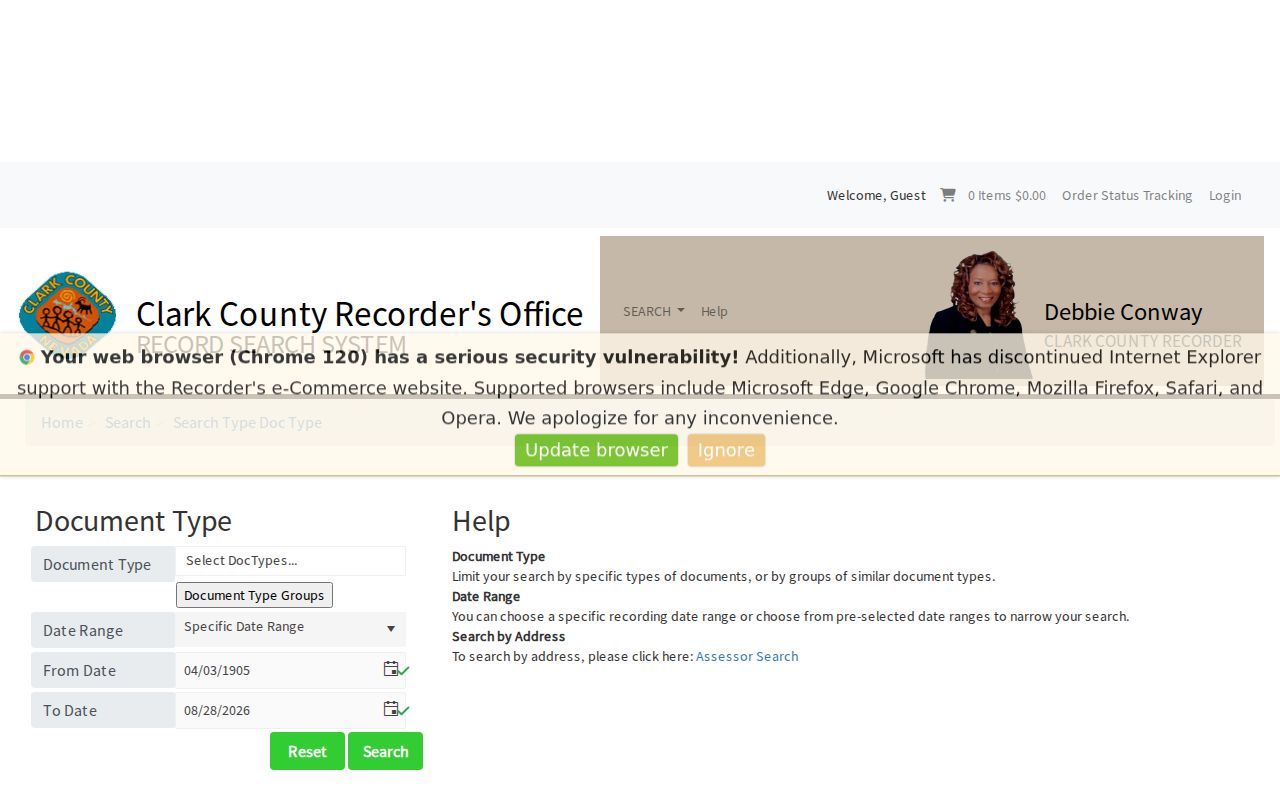
Its search modes support an APN, document number, book/page, name, or legal-description check when an address returns no clear result. A Spring Valley index search should test the same legal description at each step.
Spring Valley Previous Residents Through Deeds
A deed chain, also called a chain of title, follows transfers of the same land backward. Start from the current recorded document number on the parcel card. Open or order the latest conveyance, identify the buyer and seller, and test the seller against an earlier transaction for the same legal description. A sale, lien, trust deed, reconveyance, or subdivision document may be part of the history without being a change in who lived there. Record the document type as well as the date.
- Pull the current parcel card and preserve the APN, recorded document number, and full legal description.
- Search the Recorder by APN, current buyer or grantee name, document number, and legal description where needed.
- Inspect the latest purchase deed and note its seller or grantor, buyer or grantee, recording date, instrument or book/page, and vesting.
- Search the seller as a grantee to locate the earlier purchase, while checking the same lot, block, subdivision, or legal description.
- Repeat backward, then move to the Recorder’s public research area, mail request, or older books and microfilm when the web route stops.
- Grantor / grantee
- The grantor transfers an interest in a document; the grantee receives that interest.
- Chain of title
- The linked sequence of recorded transfers or interests for the same land.
- Legal description
- The plat, lot, block, subdivision, or other land description used to confirm a document concerns the same parcel.
- APN
- An Assessor parcel number, the local parcel key that can connect map, tax-roll, and Recorder work.
Copies can be ordered online or by mail. The Recorder lists $1 per page, plus $4 per document for certification, with online processing charges also stated on its order page. Original records may be inspected in the public research area; confirm hours before travel. A request needs identifiable document details, not a general request to create a history.
Note: Spring Valley principal-party indexing can omit another name in the document, so compare APN and legal description before accepting a link.
Spring Valley Past Residents in Directory Years
Ownership is only one layer. The verified Luskey volumes for 1956, 1957, 1959, 1966, and 1967 are criss-cross directories, which makes them useful when an address and year are known. Start in the street section, copy the exact spelling, number, unit, printed occupant, neighboring addresses, and any notation. Then look for the surname in the alphabetical section. The historical collections themselves, including the 1861–1882 UNLV reels and the 1969 Regional History file, are described on the Spring Valley city directory page.
The Las Vegas-Clark County Library genealogy page identifies historical newspapers, directories, and genealogy databases such as HeritageQuest, Ancestry Library Edition, and HeritageHub. Access can depend on a library card, branch, or the particular licensed resource. Those channels supplement the books when a known year is not on a public shelf list.
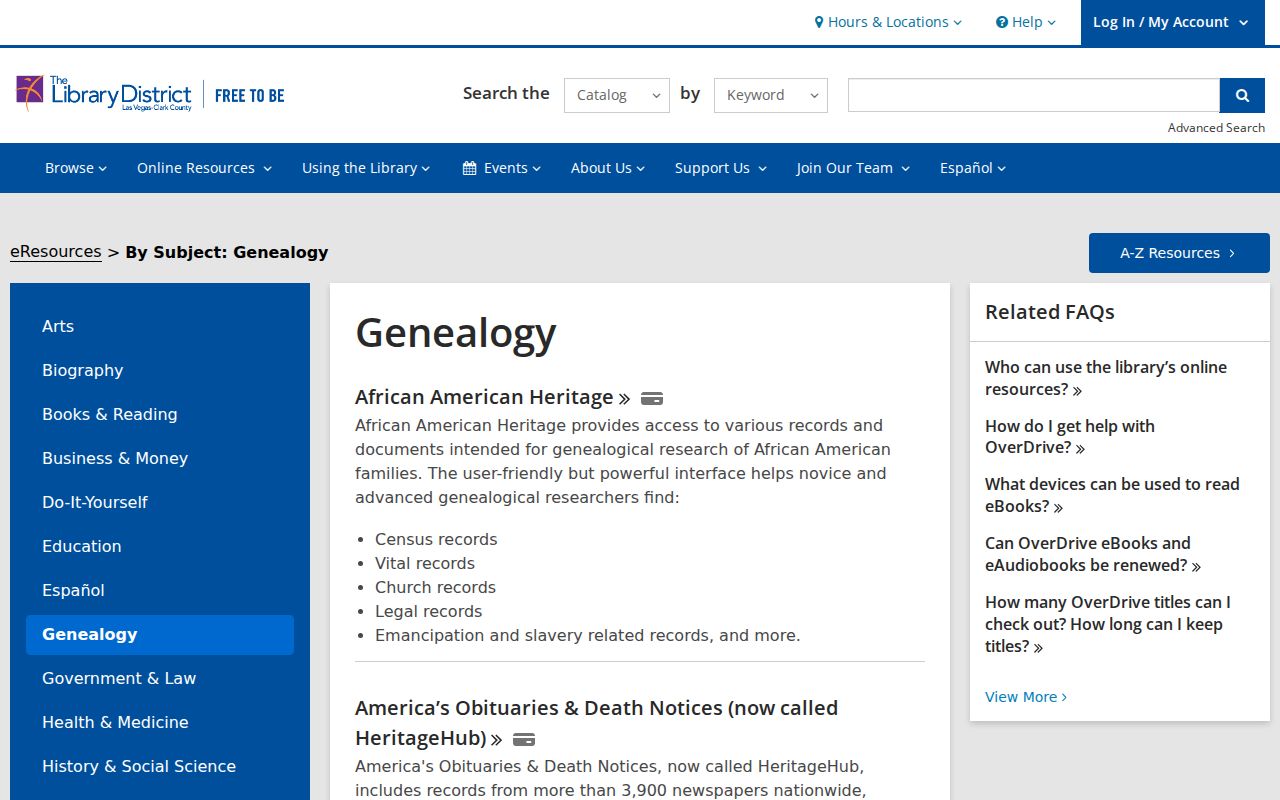
Use a Spring Valley library record as dated evidence for its printed year, not as a complete count of everyone at the address.
Pair Spring Valley Previous Residents With Census
Pair every directory checkpoint with the nearest released federal census rather than filling a missing year by guesswork. Federal schedules through 1950 are public under the 72-year rule. A census can provide household relationships, age, birthplace, and the schedule’s address or geography, while a directory can offer a closer year and a street-order listing. Together they help distinguish a former resident from a person with the same name in another part of the valley.
- Choose the closest verified directory year and copy the address exactly as printed.
- Find the nearest released census and identify the matching street, district, or household geography.
- Compare names, initials, relationships, age, and address form without forcing a match.
- Use an obituary, probate file, marriage notice, or deed only as a dated next step in the trail.
The digitized 1957 Las Vegas, Clark County, Nevada city-directory collection displays name, place, keyword/detail, and exact-match search controls, along with 577 indexed records on its public landing page. A full image or individual entry may require the database access flow.
The online 1957 result is a useful Spring Valley date-stamped lead to check against a library volume, census schedule, or newspaper record.
Spring Valley Previous Residents and Missing Addresses
Many Spring Valley tracts are postwar or later suburban development. An early directory may use Las Vegas, a rural route, a tract name, or no address that matches today’s parcel. The 1957–61 Polk Las Vegas and vicinity map/street index can bridge an historic street context, and UNLV map staff can help test whether a map covers a given address. No official Spring Valley-specific renumbering year was located, so a number change should be verified with the historic street section, county map, plat, GIS, and Recorder legal description.
Subdivisions create another break. A prior deed can describe a parent tract, parcel map, or earlier phase while today’s Assessor card shows a later unit, lot, and block. Preserve each legal description and plat book/page. If the APN changed after a Spring Valley subdivision, compare the parcel-number tree and the Recorder’s legal-description or book/page route before deciding that the chain ended.
Note: A Las Vegas postal label can accompany a Spring Valley parcel, so locality should be checked against the county map and parcel jurisdiction.
Spring Valley Past Residents, Probate, and Obituaries
Obituaries and probate records can close a former-address trail. The Eighth Judicial District Court holds records from September 1909 forward, with most records from 1990 forward searchable online; historical or restricted material may require a Records Division procedure. Probate can identify a decedent, heirs, fiduciaries, notices, or property references. Spring Valley newspapers can supply a move notice, death notice, civic appearance, or family relationship that suggests which next record to examine.
Cahlan holds newspapers, phonebooks, maps, yearbooks, and historical publications, while UNLV and the library district provide related research routes. Search a surname beside a street, subdivision, school, or organization, then preserve the publication date. Death records and certificates are controlled by Nevada access rules, so a newspaper or probate lead does not override the direct-and-tangible-interest requirements for certified vital copies.
Lawful use. Use Spring Valley previous-resident research for family history, estate work, house history, or civic curiosity. Do not use a records trail to stalk, harass, or harm anyone.