
Spring Valley City Directory Collections
Spring Valley is an unincorporated Clark County community, so its historical directory trail is spread across Las Vegas and Southern Nevada repositories. The surviving record is not a continuous local directory run. It is a set of verified checkpoints, including early Nevada Territory reels, selected Luskey criss-cross books, and a later Regional History file. Start with the period you need, then ask the holding institution about the exact volume or reel. That approach avoids treating a catalogue listing as proof that every year or every modern Spring Valley address appears in print.
| Collection | Verified years | Where held | Reader access |
|---|---|---|---|
| United States city directories, Nevada Territory | 1861–1882, four reels | UNLV Lied Library Microforms | On-site microform |
| Luskey’s Las Vegas Criss-Cross City Directory | 1956, 1957, 1959, 1966, 1967 | Nevada State Museum Las Vegas/Cahlan holdings | Appointment research |
| Las Vegas city-directory file | 1969 | UNLV Special Collections, Regional History Files, Box 12 | Request the box |
| Gale/Cengage Las Vegas directory reels | 1954–1957, 1959–1960, 1961–1966, 1966–1975, with listed gaps | Microform collection guide | Locate a reel before relying on it |
| Las Vegas, Clark County, Nevada directory collection | 1957 | Digitized collection landing page | Name and place search; image access may require an account |
The gaps matter. The Gale guide identifies missing years within several ranges, and no official source located a complete Polk or Luskey shelf list. Early reels are also more likely to document Las Vegas or Nevada Territory than the modern Spring Valley footprint. Record the source’s geographic label, not just the name on a search result.
Spring Valley, the Spring Valley CDP, the Spring Valley TAB area, and a Spring Valley parcel can appear under different county or postal labels. Keep that place context with every directory citation.
Note: A missing directory entry can reflect a publication gap, unincorporated coverage, apartment indexing, or an address change rather than an empty address.
Spring Valley Directory Reels Before Subdivisions
The UNLV city-directory microform record identifies four reels for 1861–1882. Its description says entries may include residents, occupations, places of residence, heads of families, firms, officers, street directories, churches, schools, associations, banks, and advertisements. Those are valuable clues, but they do not turn an early Las Vegas listing into a record of a later Spring Valley tract. Use the books to establish a person, organization, or regional address pattern, then test it against maps and later records.
Clark County was created in 1909, and Spring Valley’s modern suburban footprint developed later. A historical address can therefore need several search labels: Las Vegas, Las Vegas Township, Clark County, a tract name, or a subdivision. The UNLV Special Collections map collection and the circa-1957–61 R.L. Polk Las Vegas and vicinity map/street index help compare older street context with a later parcel or plat. A Spring Valley address should be checked against the map year before it is treated as the modern community.
Spring Valley Directory Book Checkpoints
The most useful address-oriented checkpoints are the verified Luskey editions for 1956, 1957, 1959, 1966, and 1967. “Criss-cross” means the volume is designed to be read by address as well as by name. Begin in the street sequence when an old address is known, then return to the alphabetical portion for initials, alternate spellings, and related listings. The City of Las Vegas historic-preservation bibliography establishes those years and the Nevada State Museum holding; it does not prove that they are the only years ever printed.
The 1969 city-directory file listed in UNLV’s Regional History Files is another useful stop, but the finding aid does not give a full run or a scan. Request the collection before planning a trip. For a Spring Valley address that was not yet part of a developed subdivision, the legal description, plat book and street map may be more stable than the modern street number.
Note: The verified Luskey dates are checkpoints, not evidence of an unbroken annual publication series for every valley address.
Spring Valley Directory Research at Cahlan
The Cahlan Research Library holds Southern Nevada manuscripts, maps, rare books, phonebooks, newspapers, microfilm, yearbooks, and historical publications. It is public and free to use, but material is noncirculating and non-browsable, so an appointment is required. Its specialized Southern Nevada holdings make it a strong place to ask about a phonebook, a high-school yearbook, or a street sequence that is not visible in a general library catalogue.
The Cahlan Research Library holdings and access page documents the repository behind this Spring Valley historical-directory work.

Use the appointment to request a specific year, address, surname, or format rather than assuming the collection is open for shelf browsing. Spring Valley researchers can also ask Cahlan staff which local-history format best fits the date.
Reading a Spring Valley Directory Entry
No official text page exposed a scanned Spring Valley or Las Vegas entry during the research. The fields below are therefore an inspection checklist drawn from UNLV’s collection description and the verified criss-cross title, not a transcription of a particular person. Read the title page and abbreviation key before copying an entry. A mark can change meaning by publisher or year, and a street address may point to a printed location rather than a present address.
| Name | Surname, given name, initials, and any household notation printed in that volume. |
|---|---|
| Address | Street number, street spelling, unit if printed, and the directory year. |
| Occupation or firm | A contextual field when the entry includes it; copy the wording exactly. |
| Household marks | Spouse, widow, boarding, owner/renter, or telephone notation only when the volume prints one. |
| Cross-reference | Link between an alphabetical name listing and a street-order section where available. |
- Criss-cross directory
- A directory arranged by street address so an address can lead to a printed occupant listing.
- Householder index
- A name arrangement focused on a household head or listed resident, rather than street order.
- Abbreviation key
- The publisher’s explanation of shortened words and marks, usually near the front of a volume.
Transcribe the entry before interpreting it. A Spring Valley directory can list a person, a household role, or a business association without proving the same relationship in another year. Compare spellings and address forms against the next verified volume, then use a census, deed, obituary, or newspaper notice as an independent dated record.
Spring Valley Directory Gaps in Newspapers
When a directory year is missing, newspapers can supply dated context without pretending to replace the directory. UNLV’s Las Vegas Age digitization is nearly complete for 1905–1947, and Las Vegas Times covers 1905–1906. The library system also identifies historical Review-Journal access and HeritageHub obituary and death-notice coverage from more than 3,900 newspapers. Search a surname with a street, subdivision, school, organization, or nearby landmark, because a name alone can produce a poor match.
The Las Vegas-Clark County Library genealogy resources route researchers to genealogy databases, historical Review-Journal material, and other local-history tools.
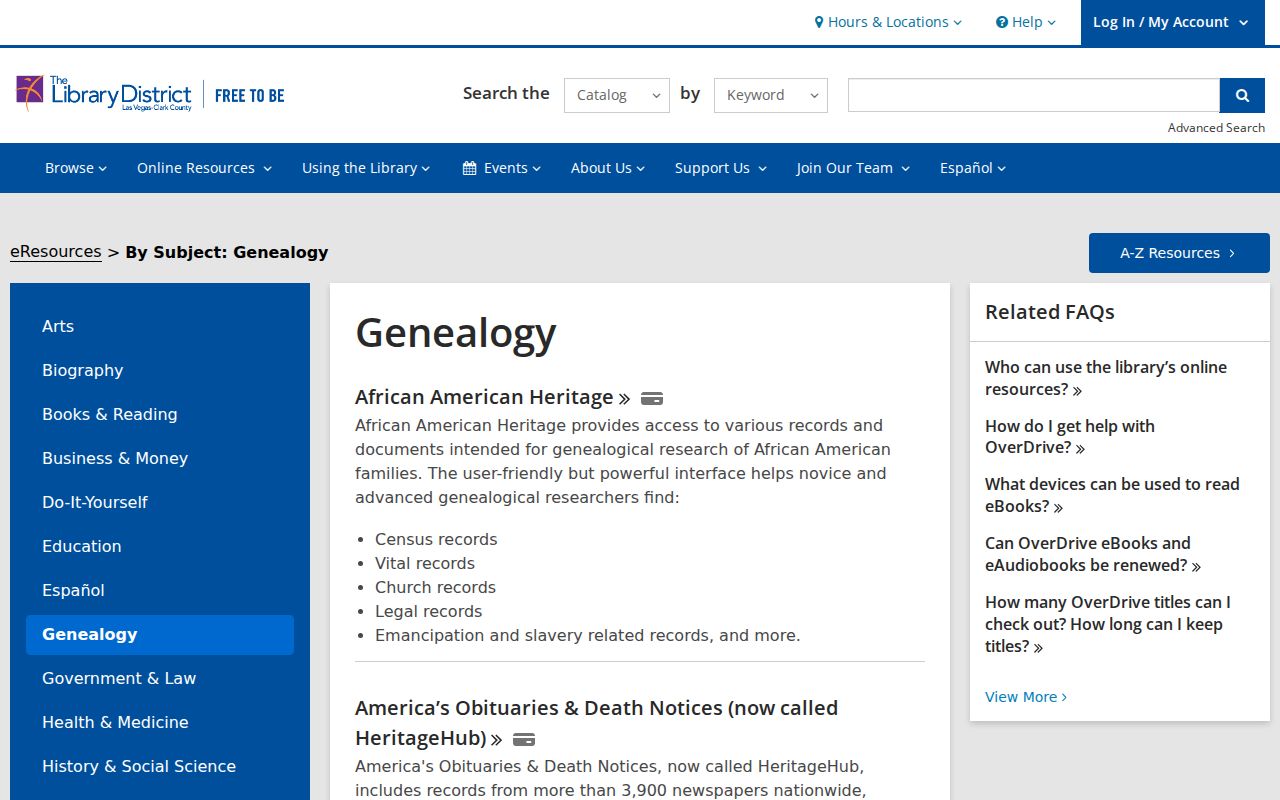
Library-card or branch rules can apply to licensed databases, while the collection descriptions remain a useful starting point for a Spring Valley request.
Note: A newspaper mention dates an event or public notice, but it does not establish uninterrupted residence at the listed address.
A 1957 Spring Valley Directory Search
The digitized Las Vegas and Clark County 1957 directory collection displays 577 indexed records on its public landing page. Its visible search choices include first and middle names, last name, place, keyword/detail, and an exact-match control. The page identifies the year and geography, but it does not expose a full scanned entry in the public text view. Check image and account requirements when a result is selected.
The 1957 collection search screen is the documented online route for this Spring Valley directory checkpoint.
Save the collection year, search form, and the exact spelling used so a Spring Valley library copy or census result can be checked against the same lead.
Spring Valley Directory Collection Timeline
The dates below show why the local directory record needs to be read as a patchwork. The early reels predate Clark County and the modern Spring Valley landscape. The Luskey checkpoints come after the valley’s postwar growth, but their published city label can still be Las Vegas. The timeline identifies documented collections and institutional changes, not an unbroken printing schedule.
- 1861–1882: UNLV’s four Nevada Territory and United States city-directory reels provide the earliest verified directory range.
- 1909: Clark County was created from Lincoln County, a jurisdictional break that matters when pursuing early public records.
- 1956, 1957, 1959, 1966, and 1967: Verified Luskey Las Vegas Criss-Cross editions provide address-oriented checkpoints.
- 1957–1961: The R.L. Polk Las Vegas and vicinity map/street index supports historic street and subdivision comparison.
- 1969: UNLV’s Regional History Files list a Las Vegas city-directory file in Box 12.
Digital access has expanded the surrounding source base, including the nearly complete Las Vegas Age run for 1905–1947 and Las Vegas Times for 1905–1906. Yet a searchable newspaper or catalogue record is not the same as a digitized directory page. Ask the repository which format, year, and access rules apply before relying on a lead. A Spring Valley written request works best when it identifies the year, street, surname, and repository collection.
Spring Valley Directories for Family History
For a family trail, work from the nearest verified year rather than assuming annual publication. A criss-cross entry can lead from an address to a listed household, while an alphabetical listing can reveal initials or a variant surname. Pair each directory find with the closest released federal census, currently schedules through 1950 under the 72-year rule. Census entries can separate two people with the same name by household relationship, birthplace, age, and the geography used at the time.
- Find the first verified directory year that fits the person or address.
- Copy the title, year, spelling, street form, unit, and all printed abbreviations.
- Check the alphabetical and street sections, if the volume has both.
- Compare the next available verified directory year, noting a move, an absent listing, or a changed street form.
- Pair the result with the closest released census, then use obituary, probate, or newspaper material to date a departure.
Obituaries can name relatives and a former residence, while probate can identify heirs, fiduciaries, and property references. Those sources help close an old-address trail for family history without converting a directory absence into a conclusion. Keep a note of each source’s year, repository, and access date for later comparison. For modern address-keyed parcel records, use the Spring Valley street directory instead of expecting historic books to show the current parcel record.